

The last three days were spent aerifing the course to prepare it form the upcoming season. We completed aerification of greens, tees and fairways. In addition to that we handled more than 700 tons of sand that was applied to the freshly punched turf. Needless to say it is a monumental task moving that much material around the golf course.
This year we used a Verti-Drain deep tine aerifer on greens that was set at a depth of 9" with 1/4" solid times. At first glance the greens appear as if they were not aerified but that is not the case. The surface impact appears minimal but a deep fracturing of the soil has taken place now allowing free movement of oxygen and water into the rootzone. The end result will be a deeper healthier root system of the plant.
The fairways have been aerified for a total of three times in the last four weeks. We took the liberty of "sneaking in" a couple of punches on the fairways back in March with the weather cooperating with us. These multiple aerifications will greatly help us control our surface firmness and allow numerous channels to be filled with sand. Over the course of the three fairway aerifications 4.5 million holes per acre were punched and 600 tons of sand was applied to the fairways alone.
Right now the fairways more closely resemble bunkers than anything else, but over the next week the grass will once again push through and start help the sand to work it's way down. The next several mowings will be extremely rough on the equipment but the end result is all that matters.
Thursday, April 12, 2012
Another One In The Books
Tuesday, April 3, 2012
A Little Rough In The Rough
After a long winter with an extended snow cover many of the northern exposure rough areas took it in the shorts as far as damage goes. These areas were effected by both Snow Mold and Vole damage. The good news is that it is not a lost cause and nothing that cannot be repaired. Most of the damage appears to be superficial and with a little work on our part these areas will come back good as new.
The main thing we will be doing is to rake out the matted areas and re-introduce sunlight and oxygen. These areas will either be hand raked out or drug with a steel mat to accomplish this task. This alone will initiate the plant to produce new leaves and stems to repair the damage.
Vole Damage


Sunday, April 1, 2012
April Fools Not
It's shocking to see some of the Scrub Oak buds already beginning to swell and some are even pushing out leaves right now. This is crazy and a good 3-4 weeks ahead of when the Oak normally comes out. We all know this has been a far from normal March, It has been the driest on record and temperatures have been well above normal. The end result has been a fooling of the Oak and this is about to go into dangerous territory.
The forecast for the next several days includes snow and below freezing temperatures all which put The Oak and all other deciduous trees in danger of damage. Time will tell how they do.

Friday, March 30, 2012
The Invaision
I was fortunate to be asked to contribute to an article that deals with Poa Annua management in Golf Course Industry Magazine. The article is running in it's current addition check it out here http://www.golfcourseindustry.com/gci0312-fighting-poa-annua.aspx
Thursday, March 8, 2012
Pick Your Poison
Coming out of winter this year is the polar opposite of last year, but I'm not sure which is better. Each and every year our biggest challenge is the how golf course will emerge from the winter. Rarely does the course make it unscathed and this year is no exception.
The prolonged snow cover (90 plus days)has been good and bad. The turf has been protected and insulated from extreme temperatures and high winds, while on the other hand conditions for damage from Voles and Snow Mold have been ideal. The extent of the damage is yet to be fully seen, but initial observations are showing the potential for some significant repairs and recovery time in the rough areas.
When comparing a tale of two winters the damage from last season primarily came in the form of wildlife (Elk and Deer)along with some minor dessication issues. This damage occurred in the main play areas such as greens,tees and fairways of which took significant time and resources to repair. These are the primary play surfaces of the golf course and anytime they are not perfect it shows from a playability and a aesthetic standpoint. Whereas this year the damage appears to be centered in the rough primarily the northern exposure locations on each and every hole. The good news is that the rough does not effect the playability as much as the key play areas so the recovery should be less painful to all involved.
Which is type of damage is better? The obvious answer is neither but for us it isn't a question of choice but a reality of where our beautify golf course is located. The setting is one of the main reasons that the golf course is so spectacular as it affords views, wildlife,serenity and a world class golf course design and conditioning.


Wednesday, March 7, 2012
Exposure Makes a Difference
Exposure or orientation of golf holes not only make a difference in playability but it makes a huge difference in agronomics as well. Direct sunlight has a tremendous effect on soil temperatures and direct growth of turfgrass especially in the shoulder season of active plant growth.
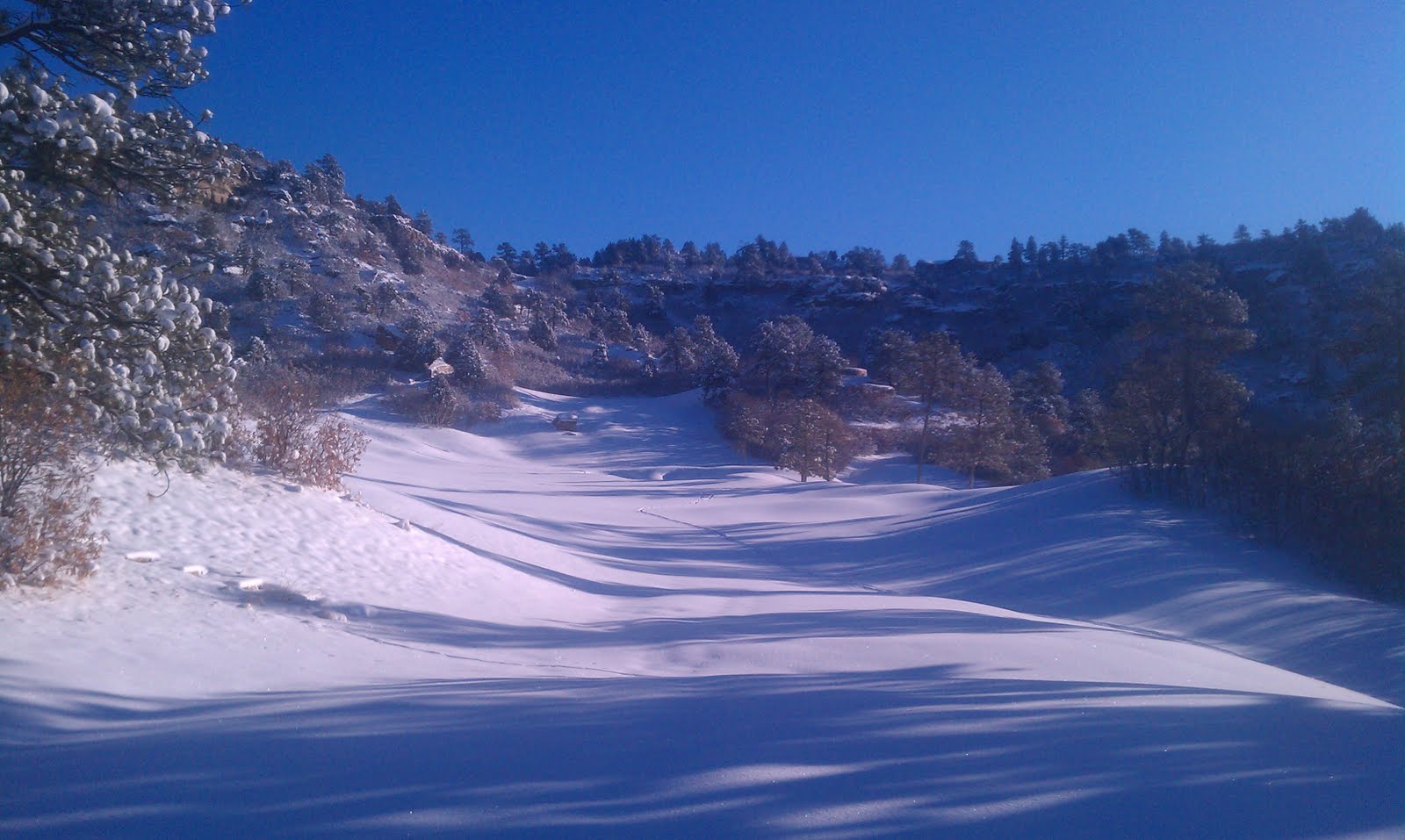
This effect is very visible on the golf course right now in relation to snow cover. All of our Northern exposures are still deep in snow cover, while areas receiving full sun have melted away and are in the process of initiating spring growth and green up. Approximately 1/3 of our golf holes are north facing and still look like Antarctica and the others look to be ready for golf. All of these differences occur from hole to hole, some areas are as close as 300 yards apart even though they seem to be on two different continents.
Here is a great look at two of the holes on the course that you would never guess the pictures were taken on the same day let alone same season.


Tuesday, March 6, 2012
The Melt
Over the last two days with temperatures in the upper 60's and high winds a big portion of the snow on the course has melted away. Unfortunately new snow is predicted over the next two days, so we will see what happens.
So far greens, tees and fairways look to be in good shape while the rough might be a different story with damage coming in the form of snow mold and Voles. Time will tell how the other areas that are still deep under snow cover will be.
On a positive note the drainage system is working nicely removing the excess flow of water from the golf course. This rapid removal of water will help prevent any standing water from forming and reduce the possibility of ice formation.

Monday, February 27, 2012
Sustainability and Subjectivity
Here is a very interesting video from Dr. Larry Stowell from Pace Turf that talks about how golfer perceptions can can effect profitability.
Thursday, February 16, 2012
The Future is Here.
Here is some great technology being put to work. Pretty soon I won't have to worry about my staff calling in sick. Now if we could just retrofit a snow blower on it, we would be set year round.
Friday, February 10, 2012
The Benefits of Turfgrass
With all the snow on the ground right now it is hard to believe that the golf season is not too far away. As the days are beginning to get longer the thoughts of green grass are once again filling my mind.
Here is a great video about turfgrass that most people do not even think about.
Thursday, February 2, 2012
Iron

While driving around today I noticed an interesting phenomenon from applications of Iron and other Bio stimulants to some of our trees. We have been treating a handful of weakened trees as a result of effluent water for irrigation purposes on the golf course.
We have been applying this special mixture every two weeks to help buffer the salts found in the water and soil that is harming the trees. I was surprised to see that the iron in the tank mix still had a greening effect on the turf even though the plant is dormant for the winter.
The picture shows the green up from where the solution has been applied at the base of the tree, additional the runoff has moved into the fairway greening up the Bentgrass as well. Pretty cool stuff!
Wednesday, February 1, 2012
Now On Twitter
I have recently added twitter to my methods of communicating things that are happening on and around the golf course. Twitter will be used mostly for quick hitting comments and random course updates.
The blog will still be utilized for more in depth information related to things taking place on the golf course. Please follow me on Twitter Here
Friday, January 20, 2012
Night and Day
Here is the latest regional update from the USGA. It is amazing how the weather patterns are so different from year to year. This confirms what I have always said, that the winters are more difficult on the turf than the summer time. The link to the update can be found Here enjoy.
Thursday, December 29, 2011
High Winds

Generally the area of failure comes from the rope rubbing against steel poles causing the rope to break. We have been installing sleeves made out of old hose to help reduce the friction on the rope in these wear areas. The fence installation has been an ongoing experiment and we are continuing to find out better ways of securing the fencing material to the post.
Wednesday, December 28, 2011
At First Look

All turf managers biggest fear is the formation of a lasting ice layer under the snow which will over time suffocate and eventually kill the turf. Poa Annua is the most vulnerable to this problem and fortunately for us our Poa populations are not terribly high. Damage to Poa can occur in as little at 14 days whereas Bentgrass can withstand prolonged cover of more than 30 days with out problem.
The snow is still very light and powdery with a thin crust on top which is actually holding the snow cover in place against the strong winter winds. Another side benefit from using fencing to keep the elk of the greens has been the fact that the snow on the greens has been untouched. All of it remains light and fluff and not packed down by foot traffic which also can lead to ice formation.
The seven day forecast looks to be warm with high winds, so a great potential for significant snow melt exist. We will be closely monitoring the melting and take any necessary actions to protect the greens from ice forming. This could include complete to partial snow removal and making sure no excess water freezes on the greens surface.
There is no off season when it comes to managing turf, the only thing that changes are the situations that create a different set of problems for turf loss.
Friday, December 23, 2011
Picture Perfect
Tuesday, November 15, 2011
Another One Is Done
As the wildlife activity increases another green has been shut down for the season. The latest green to be closed is #6 which was one of the most heavily damaged ones last year.
The fencing has been put up and but unfortunately some minor damage has already occurred. That being said the entire green was dormant seeded and then covered with a heavy layer of sand to help insulate and protect the green throughout the winter. The hoof marks appear to have only scraped away the turf leaving the crown of the plants in tact which should allow for a full recovery. If not new seed is in place to help repair these areas come spring.
Additional greens will be closed as deemed by the wildlife traffic. Eventually they will all be shut down by the 1st of December.
Close Up of Hoof Damage


Friday, November 11, 2011
The Replacements Are Here!


We have begun replacing some of our trees that have died in the last several years with new ones that will help re-vegetate these areas.
This fall we are planning on planting 10 new pine trees that will range in height from 16' to 22' tall so that they do not look out of proportion with the surrounding trees. These trees will be a combination of both Austrian and Ponderosa Pines which will add some genetic variability to the Forrest.
Thursday, November 3, 2011
That's A Wrap

This fertilizer application will supply the nutrients to the turf immediately and allow the plant to store "food" (carbohydrates) for next spring. An effective late fall fertilization will benefit the turf by producing carbohydrates, encouraging early spring root growth, providing good spring color and improving turf density.
Next week we are scheduled to blow out the irrigation system and it looks like we will be doing it with snow on the ground.....again.
Friday, October 28, 2011
Mocking Up

All things considered the design will stay essentially the same but minor tweaks will be done to ensure the Elk remain on the out side looking in.


